What the Anion Gap Shows
The anion gap is a helpful method to determine whether there are not directly measured charged particles in the bloodstream. It is derived from routine electrolytes on a blood test and guides clinicians identify signs that may suggest an electrolyte imbalance or an acid-base disorder. The calculation typically uses sodium, chloride, and bicarbonate, which are part of AG metabolic acidosis causes list a standard serum chemistry panel.
In basic terms, the anion gap compares the major positive ions with the major negative ions that are actually measured. Because not every ion in the blood is measured on standard lab testing, the gap can act as a diagnostic clue when a lab result looks off. It is not a isolated diagnosis, but it can guide further assessment and account for a unexpected blood test pattern.
The value is especially useful helpful when reviewing acid-base balance. A shift in the anion gap may imply that acids are increasing, that proteins are affecting the calculation, or that the body is losing or retaining ions in a way that changes the expected reference range. For that reason, the anion gap is often viewed part of a broader electrolyte panel and not interpreted in isolation.
How the Anion Gap Calculator Functions
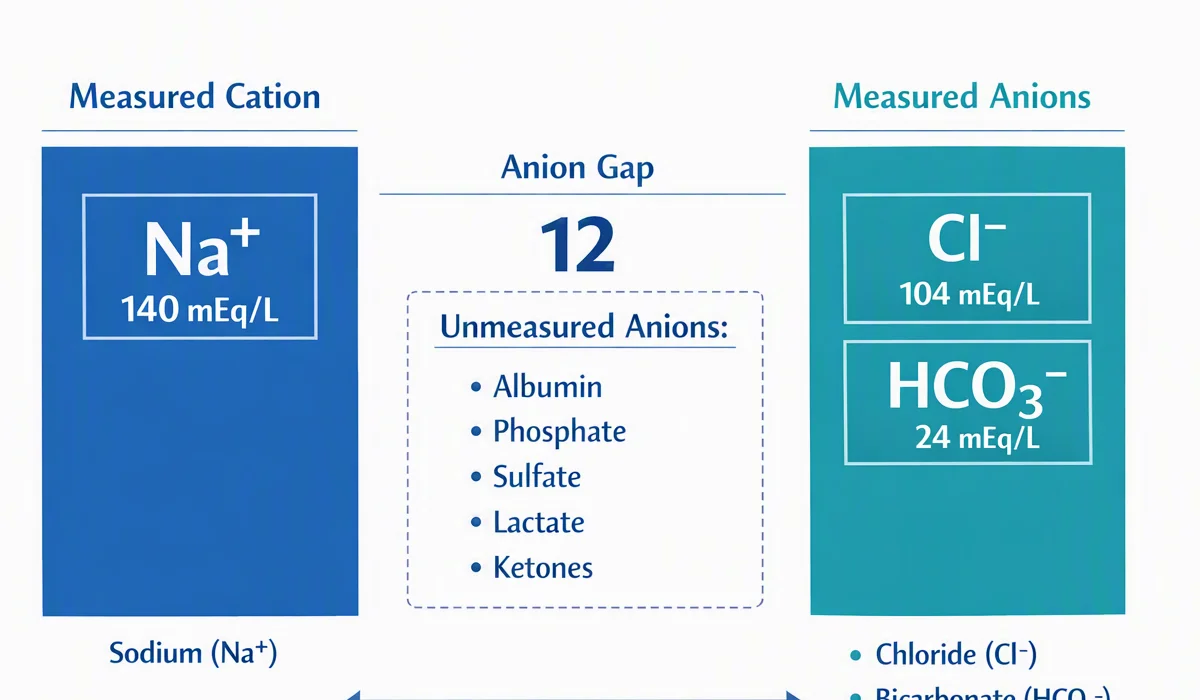
A anion gap calculator is a simple instrument that carries out the computation using standard laboratory values. Most calculators use the formula:
anion gap = sodium − (chloride + bicarbonate)Some versions add potassium, but the most common clinical approach uses sodium, chloride, and bicarbonate only. The calculator speeds up streamline calculation and minimizes the chance of arithmetic errors, especially when reviewing multiple results during patient evaluation.
Applying the calculator is easy. Provide the sodium, chloride, and bicarbonate values from the serum chemistry panel, then review the result against the expected normal range. The outcome may point toward a metabolic disturbance such as metabolic acidosis, or it may indicate the need to look for a less obvious cause of a low value.
The calculator supports screening and early interpretation, but it does not replace clinical context. A number by itself cannot tell you why the value is abnormal. For that reason, the result should always be considered alongside the full medical review, symptoms, medications, and other lab findings.
Standard Anion Gap Values and Reference Values
The typical range for the anion gap can change depending on the testing method, the analyzer employed, and whether potassium is included in the formula. That is why the most reliable benchmark is the local reference range printed with the laboratory report. A result that seems elevated in one setting may be within the expected range in another because of lab variation.
One important factor in the interpretation of the anion gap is blood albumin. Albumin is a major negatively charged protein in the blood, and it affects the measured gap significantly. When albumin is low, the anion gap may appear reduced than expected even if an underlying problem is present. This is where albumin correction and the adjusted anion gap become useful.
Hypoalbuminemia can mask a real abnormality, so clinicians often adjust the result before making decisions. A corrected value provides a more accurate picture of the patient’s acid-base status and improves the usefulness of the calculator for evaluation. In other words, the raw number matters, but the corrected number may matter even more in specific circumstances.
Because there is no single universal cutoff, the best approach is to compare the lab result to the local reference range and then review the patient’s condition. A mild abnormal value may be less alarming in one person and more significant in another, especially if the person has kidney impairment, dehydration, or another active illness.
Elevated Anion Gap Metabolic Acidosis
A increased anion gap often points to metabolic acidosis. In this situation, the body has accumulated acids or depleted buffering power, and the increase in unmeasured anions expands the gap. This is one of the most important uses of the calculator because it can point to serious conditions that need immediate medical attention.
Common causes include lactic acidosis, ketone-related acidosis, and advanced waste retention. Lactic acidosis can occur when tissues are under-oxygenated or when the body is under major strain. Ketoacidosis is often associated with uncontrolled diabetes, fasting, or other metabolic states that promote ketone formation. Uremia refers to the retention of waste products seen in advanced renal disease, which can also raise the anion gap.
When a high result appears, the next step is not just to verify the number but to understand the cause. The calculator is a first step for medical context and broader patient evaluation. Additional labs, symptom review, and history help determine whether the problem is related to an infection, poor perfusion, toxin exposure, diabetes, or impaired kidney clearance.
Symptoms may vary, but a high anion gap frequently appears alongside a more serious acid-base problem. Because the underlying causes can escalate fast, a high value should never be ignored even if the person feels only mildly ill. The result is best treated as an important clinical hint rather than a final answer.
Low Anion Gap Causes and Diagnostic Relevance
A reduced anion gap can be less common than a elevated one, but it can still be clinically meaningful. One of the most common causes is hypoalbuminemia, since lower albumin reduces the unmeasured negative charge in the blood. In many cases, the low value is explained after performing correcting for albumin.
Further causes may include laboratory errors, certain medications, or an excess of positively charged proteins. Myeloma and abnormal protein levels are important conditions to consider because abnormal proteins can lower the gap and offer an early clue to an underlying disorder. In these situations, the anion gap can be part of a larger workup rather than a diagnosis on its own.
Clinical meaning depends on the full picture. A low result in someone with no symptoms may reflect protein changes or testing differences, while a low result in a person with fatigue, bone pain, kidney issues, or unexplained anemia may need deeper evaluation. This is why a low value should be read as a signal to review the broader lab pattern and the patient’s condition carefully.
When using an anion gap calculator, a low value should prompt a look at albumin, total protein, and other measurements from the chemistry profile. The number itself is not a diagnosis, but it can direct the next step in the clinical review.
Electrolyte Imbalance and Associated Lab Results
The anion gap is only just one element of the larger picture of electrolyte disruption. Shifts in potassium, magnesium, and calcium may appear with an abnormal gap, and these related values can help illustrate the complete pattern. A person may have a problematic electrolyte pattern even when the anion gap itself is only somewhat abnormal.
For example, vomiting, poor intake, diarrhea, medication effects, or endocrine disorders can all affect multiple electrolytes at once. In a broad electrolyte panel, it is important to look for trends rather than focusing on one number alone. The anion gap may help spot an acid-base issue, while potassium, magnesium, and calcium may show how the body is adjusting or failing to compensate.
Dehydration can also affect lab values by concentrating the blood and changing the measured levels of several ions. In some cases, dehydration may make an abnormal pattern simpler to detect. In others, it may obscure the true severity of the underlying problem until fluid balance is corrected.
Because these lab patterns often overlap, a careful interpretation requires comparing the anion gap with the rest of the blood test, current symptoms, and the overall clinical picture. That broader perspective enhances the usefulness of the calculator and helps avoid overinterpreting a single abnormal value.
How to Read Results Accurately
Careful clinical reading starts with the fundamental equation, then progresses into context. First, check the sodium, chloride, and bicarbonate values. Next, match the result to the laboratory’s reference range. Finally, consider whether albumin is normal or low, since that may alter the meaning of the number.
It is also necessary to consider acid-base balance as a whole. A slight abnormality may fit with a temporary metabolic disturbance, while a more significant change may point to a more urgent problem. The calculator is useful for spotting patterns, but the interpretation should take into account recent illness, medications, fluid status, and known kidney disease.
In many situations, clinicians use the result as a beginning point for further testing. They may review lactate, ketones, kidney markers, protein levels, or other studies depending on the suspected cause. This is why the anion gap works best as part of a systematic assessment rather than as a isolated screening tool.
When in doubt, a adjusted result may be more helpful than the raw value. The corrected anion gap can be especially helpful in patients with low albumin because it minimizes the risk of missing a hidden acid-base problem. Still, even corrected values require thoughtful judgment and the support of a qualified clinician.
When to Seek Medical Evaluation
An abnormal anion gap should be viewed carefully when it appears with concerning symptoms. Signs such as confusion, shortness of breath, severe weakness, vomiting, chest discomfort, or worsening drowsiness may suggest a problem that needs prompt medical evaluation. The calculator can identify the abnormality, but it cannot determine how sick a person is.
Emergency care is especially important if the abnormal result is paired with rapid breathing, dehydration, altered mental status, or known diabetes with possible ketoacidosis. Similarly, a patient with significant kidney disease or suspected uremia should be checked promptly if the labs are worsening.
Even without dramatic symptoms, a sustained abnormal value may need additional monitoring. A high or low number can anion gap in chronic kidney disease be a useful diagnostic clue, but it should be reviewed in the setting of the full clinical story, recent illness, and other labs. If the result is unexpected, repeat testing or additional workup may be appropriate.
In short, the calculator supports understanding, not self-diagnosis. It can help people and clinicians identify trends earlier, but it should never replace professional patient evaluation when symptoms are present or the lab pattern is concerning.
Frequently Asked Questions
How do you calculate the anion gap?
The most common anion gap calculation is sodium minus the sum of chloride and bicarbonate. In formula form, it is sodium − (chloride + bicarbonate). An anion gap calculator does this quickly using values from a lab test or serum chemistry panel.
What does an elevated anion gap indicate?
A high anion gap often suggests metabolic acidosis, which means acid is building up or buffering is being overwhelmed. Common causes include lactic acidosis, ketoacidosis, and uremia. The result is a clue, not a diagnosis, so the full clinical context matters.
What may cause a reduced anion gap?
A low anion gap is often related to reduced albumin, but it can also occur with multiple myeloma, paraproteinemia, or certain test-related errors. Reviewing albumin and other lab values helps interpret the abnormal value and decide whether further evaluation is needed.
Does albumin affect the anion gap calculation?
Yes. Albumin has a major effect on the result because it contributes to the blood’s normal charge balance. Decreased albumin can decrease the measured gap, which is why albumin correction and a revised anion gap are sometimes used for more accurate interpretation.
Can an anion gap calculator diagnose a condition?
No. An anion gap calculator is a useful tool for evaluating and interpretation, but it does not provide a final diagnosis. It supports review of acid-base problems and electrolyte patterns, but only a clinician can combine the lab findings, symptoms, and medical history into a diagnosis.