Understanding the Anion Gap?
The anion gap is a calculated number used to help assess acid-base balance and detect certain issues in the body’s electrolytes. It looks at the main measured positively charged and negatively charged ions in plasma or serum to infer the presence of unmeasured ions. In daily clinical use, the anion gap is a valuable clue in interpreting an acid-base disorder, especially metabolic acidosis.
Because common blood chemistry tests do not measure every ion in blood, the anion gap can help fill in part of the picture. A increased or reduced result does not diagnose a condition by itself, but it can guide the next step in clinical interpretation. That is why many clinicians use an anion gap calculator to quickly calculate anion gap values from a patient’s lab values.
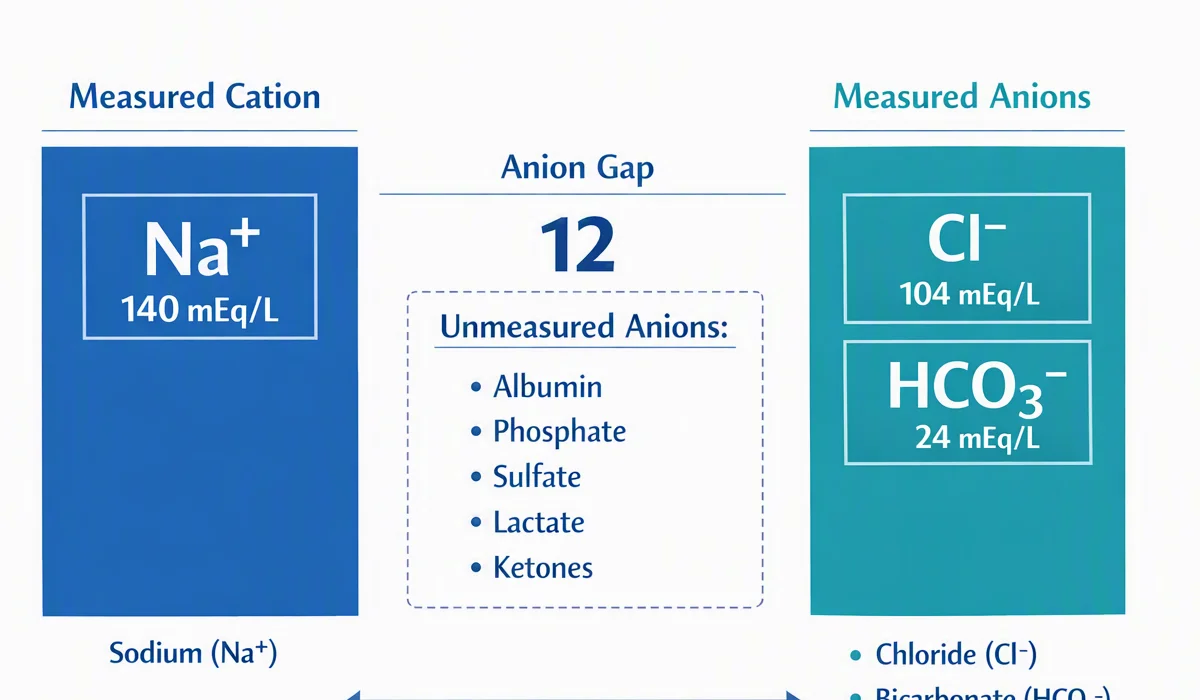
In basic terms, the anion gap reflects the difference between measured cations and measured anions. The most common measured cation is sodium, and the main measured anions are chloride and bicarbonate. This is why the test is so closely tied to an electrolyte panel and broader serum electrolytes interpretation.
Anion Gap Calculation
The standard anion gap formula reads:
Anion gap = sodium - (chloride + bicarbonate)
Some labs and clinicians also use different versions that include potassium, but the most widely used formula omits it. For everyday use, the calculation usually relies on serum sodium, serum chloride, and serum bicarbonate. These represent the core values used in an anion gap calculation and in many online calculator tool options.
To use an anion gap calculator, you only enter the relevant serum electrolytes. The tool then carries out the math automatically and gives a result that can support medical interpretation. A calculator is especially useful when reviewing multiple labs or when you want a quick check on a lab result during a metabolic acidosis workup.
Below is the basic logic behind the formula:
- Sodium acts as the largest measured cation in the blood. Chloride and bicarbonate are the main measured anions. The gap indicates unmeasured anions such as proteins, phosphate, sulfate, and organic acids.
As a result, the result can help identify whether an electrolyte imbalance is being driven by additional acid in the body, loss of bicarbonate, or another process affecting blood chemistry.
Step-by-Step Example of Calculating Anion Gap
Below is a basic sample calculation based on typical laboratory values:
- Sodium = 140 Chloride = 104 Bicarbonate = 24
Next, apply the formula:
140 - (104 + 24) = 140 - 128 = 12
The calculated anion gap is 12. According to the lab’s normal range, this may be considered in the normal anion gap range. Always check the result with the specific lab’s range, because the normal interval can vary slightly by method and analyzer.
A further example can help show how the result changes:
- Sodium = 138 Cl = 98 HCO3 = 16
138 - (98 + 16) = 138 - 114 = 24
This indicates an high anion gap and may suggest a high anion gap process, especially if the patient has symptoms or other abnormal labs. In practice, this kind of result prompts closer review of the clinical context and additional testing.
What Is a Increased Anion Gap Indicate?
A high anion gap typically indicates there are extra unmeasured acids in the blood. The most common clinical concern is acidosis, where acid accumulates or bicarbonate is consumed faster than it can be replaced. This is a key reason the anion gap is so important in an acid-base disorder evaluation.
Common causes of a increased anion gap include:
- Lactic acidosis, where lactate rises because of limited oxygen delivery, shock, severe illness, or certain medications Ketone-related acidosis, which can occur with diabetes, starvation, or heavy alcohol use Poisoning from toxic alcohols, including substances such as methanol or ethylene glycol Kidney failure or other conditions that reduce acid clearance
These causes are often reviewed during a metabolic acidosis workup. The anion gap does not identify the exact cause on its own, but it helps narrow the differential diagnosis. For example, a very elevated value in the setting of illness may point toward lactate-related acidosis, while anion gap in chronic kidney disease a patient with diabetes and high glucose may raise concern for ketoacidosis.
It is also important to remember that a high result is not always due to one dramatic diagnosis. Sometimes medication effects, dehydration, or mixed disorders can influence the final interpretation. That is why the anion gap should be read alongside the full picture of blood electrolytes, symptoms, and other test results.
What Is a Low Anion Gap Mean?
A decreased anion gap is more unusual than a elevated one, but it can still be medically important. One major cause is hypoalbuminemia, or low albumin. Because albumin is a negative-charged protein, a reduction in albumin can depress the measured gap even if nothing else is wrong with the acid-base balance.
Other possible low anion gap causes include:
- Lab error or specimen handling problems Changes in proteins associated with multiple myeloma Substantial increases in unmeasured cations Measurement issues affecting the measured electrolytes
Among these, laboratory error is one of the initial things to consider because it is typical and easy to recheck. If the value remains low, then albumin level and other blood chemistry markers should be reviewed thoroughly. In some cases, a low gap may be the first clue to multiple myeloma or another protein disorder.
Low values do not always signal urgent disease, but they should not be ignored. A patient with persistent low anion gap findings may need further evaluation, especially if there is anemia, kidney issues, bone pain, or other signs that fit a protein-related disorder.
Normal Anion Gap Range and Correction for Albumin
The normal range for the anion gap is influenced by the laboratory method, but a commonly used range is artifacts causing low anion gap approximately 8 to 12 mEq/L when potassium is excluded. Certain laboratories use different cutoffs, so the printed range on the report should always guide interpretation. A result may be normal in one lab and a bit elevated in another.
Because albumin affects the result, many clinicians apply an albumin correction. This matters when interpreting the computed anion gap in patients with low protein levels. If albumin is reduced, the anion gap may appear falsely reassuring unless corrected.
A common correction approach is to add about 2.5 mEq/L to the anion gap for every 1 g/dL decrease in albumin below 4.0 g/dL. For example, if albumin is 2.0 g/dL, the correction would be about 5 mEq/L. This can change the overall assessment significantly, especially when evaluating a possible acid-base disorder.
Why does this matter? Albumin is one of the major unmeasured anions in the blood. When albumin is low, the body has fewer negative charges to “balance” the measured cations, so the apparent anion gap drops. Correcting for albumin makes the number more precise and improves clinical decision-making.
In practice, the best approach is to look at the raw value, the albumin level, and the corrected value together. That gives a clearer picture than relying on a single number alone.
Typical Concerns About Anion Gap Calculation
The anion gap is a blood test-based measure, but it is not a single test. It is calculated from the electrolyte panel and used to assist interpret the results of standard chemistry testing. Clinicians use it as part of broader clinical use in assessing acid-base disorders, especially metabolic acidosis.
When should someone focus on the number? A elevated or reduced result may be more important if the patient has symptoms such as vomiting, confusion, rapid breathing, weakness, or signs of dehydration. In such settings, the anion gap can support a diagnosis or prompt further testing.
Is the number enough by itself? Not really. The value is a diagnostic tool, not a final answer. It should be interpreted with the rest of the blood chemistry, including glucose, kidney function, albumin, and sometimes lactate or ketones. The goal is to interpret laboratory values in context rather than in isolation.
Because the calculation is so easy, many clinicians and patients use an anion gap calculator to avoid arithmetic mistakes and speed up review. This is especially valuable when comparing repeated results over time or checking whether a change is real versus due to shifting electrolytes.
When to Use an Anion Gap Calculator
An anion gap calculator is most helpful when you want a quick, reliable calculate anion gap result from a set of serum electrolytes. It minimizes manual errors and provides a quick check during routine review of a lab result. The calculator tool is particularly useful when multiple values need to be assessed quickly in a busy clinical setting.
Common situations where a calculator helps include:
- Checking an abnormal electrolyte panel Checking for metabolic acidosis or other acid-base disorders Checking whether a result fits normal anion gap expectations Supporting medical interpretation when albumin is low Running quick screening for possible elevated or decreased gap states
The calculator is not a substitute for clinical judgment, but it is a handy diagnostic tool. It helps double-check the arithmetic, review values over time, and use the right albumin correction when needed. This improves confidence in the final interpretation of the lab data.
Using an anion gap calculator is also helpful when teaching students or explaining the result to patients. Since the formula is easy to follow, the tool makes it easier to connect the numbers on the page to the underlying physiology of acid-base balance.
Frequently Asked Questions
How do you calculate anion gap from lab values?
Use the anion gap formula: sodium minus the sum of chloride and bicarbonate. In formula form, it is anion gap = sodium - (chloride + bicarbonate). This is the standard way to calculate anion gap from routine lab values on a blood chemistry panel.
What is the normal anion gap range?
The normal values depend on the laboratory’s reference range, but a common range is about 8 to 12 mEq/L when potassium is not included. Always use the range printed with the test result, since methods and analyzers can differ.
Why is this protein used to correct the anion gap?
Albumin is a major unmeasured anion in the blood, so low albumin can lower the measured result. Albumin correction helps render the calculated anion gap more reliable, especially when hypoalbuminemia is present.
What triggers a high anion gap?
A high anion gap is often caused by metabolic acidosis from extra acids in the body. Common causes include lactic acidosis, ketoacidosis, and toxic alcohol ingestion. Kidney failure and other acid-retaining conditions can also increase the gap.
Can a low anion gap be a sign of a serious problem?
Yes, sometimes it can. A low anion gap may result from lab error, but it can also be linked to hypoalbuminemia or conditions such as multiple myeloma. If the finding persists, it deserves careful review along with the rest of the serum electrolyte data and the patient’s clinical picture.